Shuler’s ‘State of the Unions’: Working People Are Hurting, Want and Need Unions More Than Ever
In her fourth annual “State of the Unions” address, AFL-CIO President Liz Shuler emphasized the pain working people are feeling, the lack of trust working-class voters have in politicians and that electing pro-worker candidates will rely on working people talking to their neighbors.
“This Labor Day, shit’s too expensive,” Shuler said. “That’s what 94% of workers told us in our new poll. Four out of five say: paychecks aren’t keeping up with the cost of living—groceries, rent, child care, gas….Working people are hurting. Working people are angry. But this Labor Day, the State of the Unions is clear: We’re motivated. We’re mobilized. We’re ready. And we’re going to win.”
The AFL-CIO also releasednew pollingthat surveyed 1,500 registered voters, including both union members and nonunion workers.
Key findings include:
Trust in unions exceeds trust in political parties. Fifty-two percent of workers trust unions compared to 32% for the Democratic Party (by 20 points) and workers are twice as likely to trust unions than to trust the Republican Party (52% to 26%).
Young workers trust labor unions most. Among workers ages 18–30, 61% trust unions more than twice as much as they trust the Democratic Party (28%) or the Republican Party (22%). Among young men, the trust gap is 40 points between unions and Democrats (63% to 23%) and 43 points between unions and Republicans (63% to 20%).
Neighbors are the only group workers trust more than unions. Seventy-five percent of workers say they trust their neighbors.
The AFL-CIO polling dropped on the same day as new polling from Gallup, which showed union approval is at a record high of 71% nationally. President Shuler’s address can beviewed here. The federation’s polling was conducted in coordination with David Binder Research. A memo of the full results can be found here.
Legislative Workers Win Voluntary Union Recognition from Denver
Top Cut:
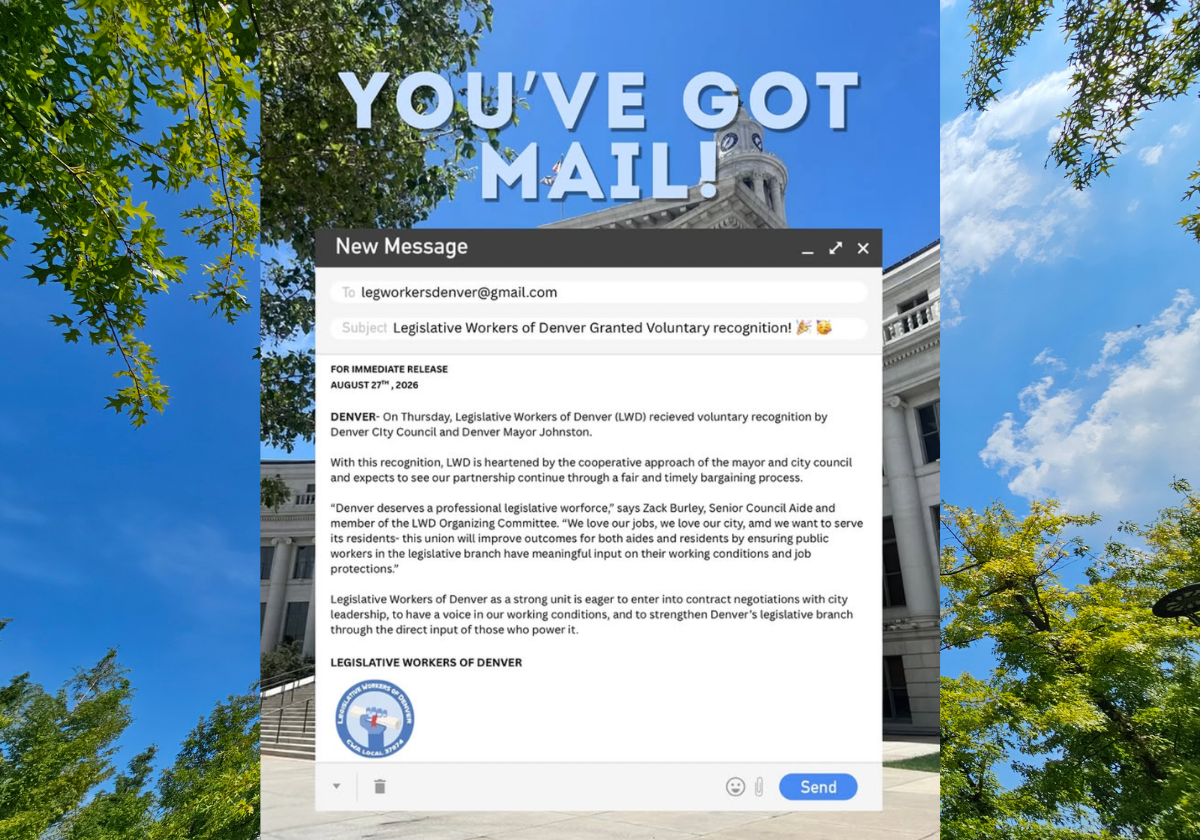
Legislative Workers of Denver, represented by TheNewsGuild-CWA, received voluntary recognition from the Denver City Council and Denver Mayor Mike Johnston. The union is a collective group of part-time and full-time staff who provide specialized, professional-level work to support Denver’s 13 elected City Council members.
Why It Matters:
“We are seeking this bargaining unit as an extension of that commitment to Denverites and the elected officials we support,” workers wrote in a letter. “We believe that a workforce imbued with bargaining rights and negotiated outcomes is a more resilient and effective workforce. We believe this unit and the outcomes of a formal negotiation will raise the retention rates among staffers, improve living conditions for our members, protect institutional knowledge of the legislative branch, and enhance the impacts we can make together for Denverites.”
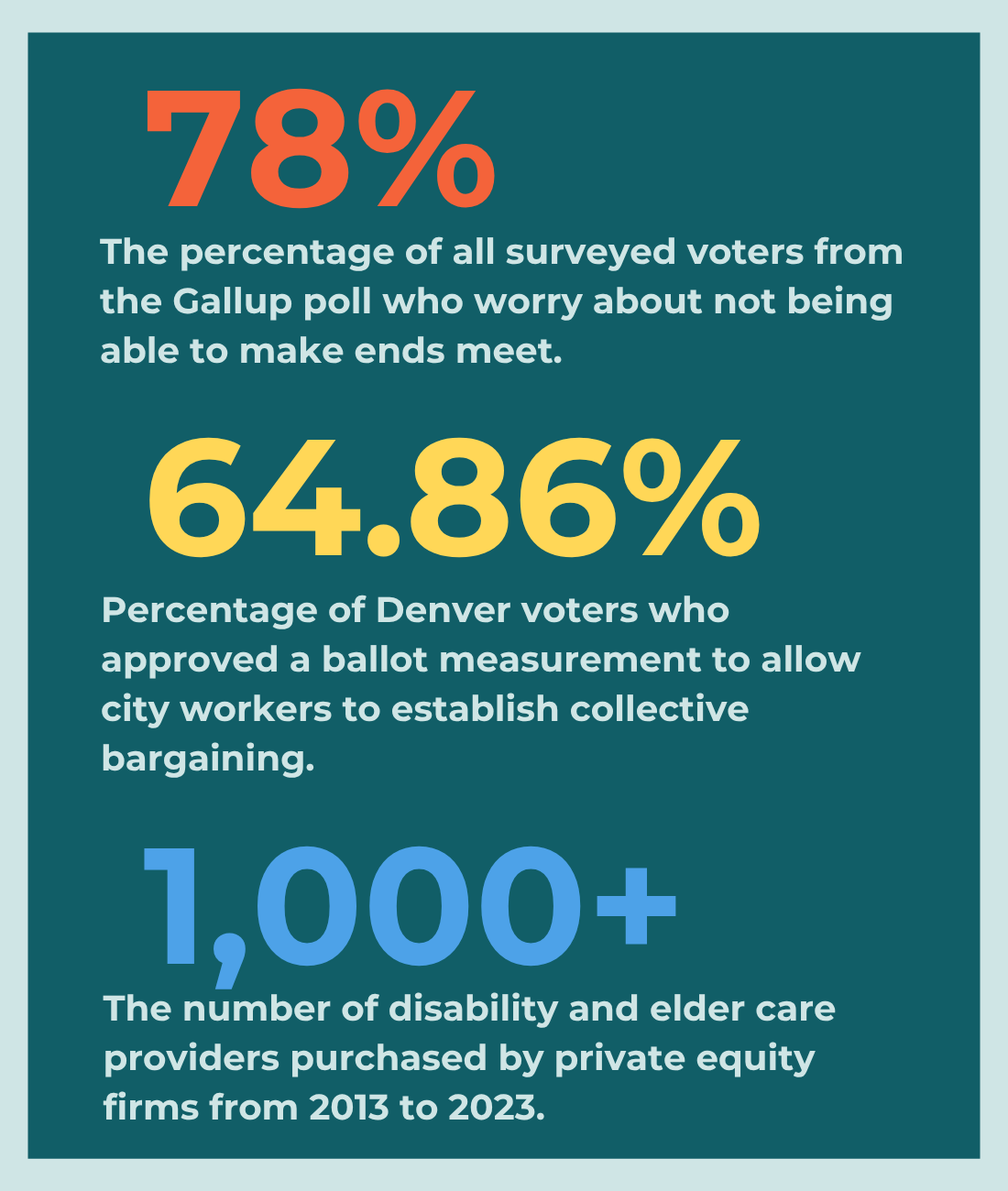
The Denver City Council unanimously referred Ballot Measure 2U, establishing collective bargaining rights for city employees, to Denver voters in November 2024. Voters overwhelmingly approved it, supporting public workplace democracy.
Illinois AFSCME Members Push New State Law Protecting Disability Services
Top Cut:
A new Illinois state law will help protect services for people with disabilities from being drained by asset management companies. It’s a major victory for AFSCME public service workers and the people in their care. Illinois Gov. JB Pritzker recently signed the law, which was initiated by AFSCME Council 31.
Why It Matters:
Council 31 said that these “anti-looting” provisions are the first of their kind in the United States and a powerful example of how AFSCME members are standing up to protect the public services.
“This law is an important step toward preventing the predatory takeover of nonprofit agencies that serve individuals with disabilities,” said Council 31 Executive Director Roberta Lynch.
Starting next summer, firms that own disability service agencies must certify that their management won’t drive the agencies into financial distress. These certifications will give the state and watchdogs new power to pursue asset managers and private equity firms that try to plunder the social safety net.
The law requires agencies that provide services for individuals with developmental disabilities to disclose to the state Health Facilities and Services Review Board whether they’re owned by an asset management company, and to notify the board in advance of any proposed sale that would put the agency under such ownership or management. Under the law, agencies must also divulge information about their ownership, finances and staffing on a quarterly basis, and notify the state ahead of any transaction, like a sale or the issuance of dividends, that might seriously erode the agency’s financial condition or governance.

.png "AFL-CIO President Liz Shuler during her “State of the Unions” address.")